|
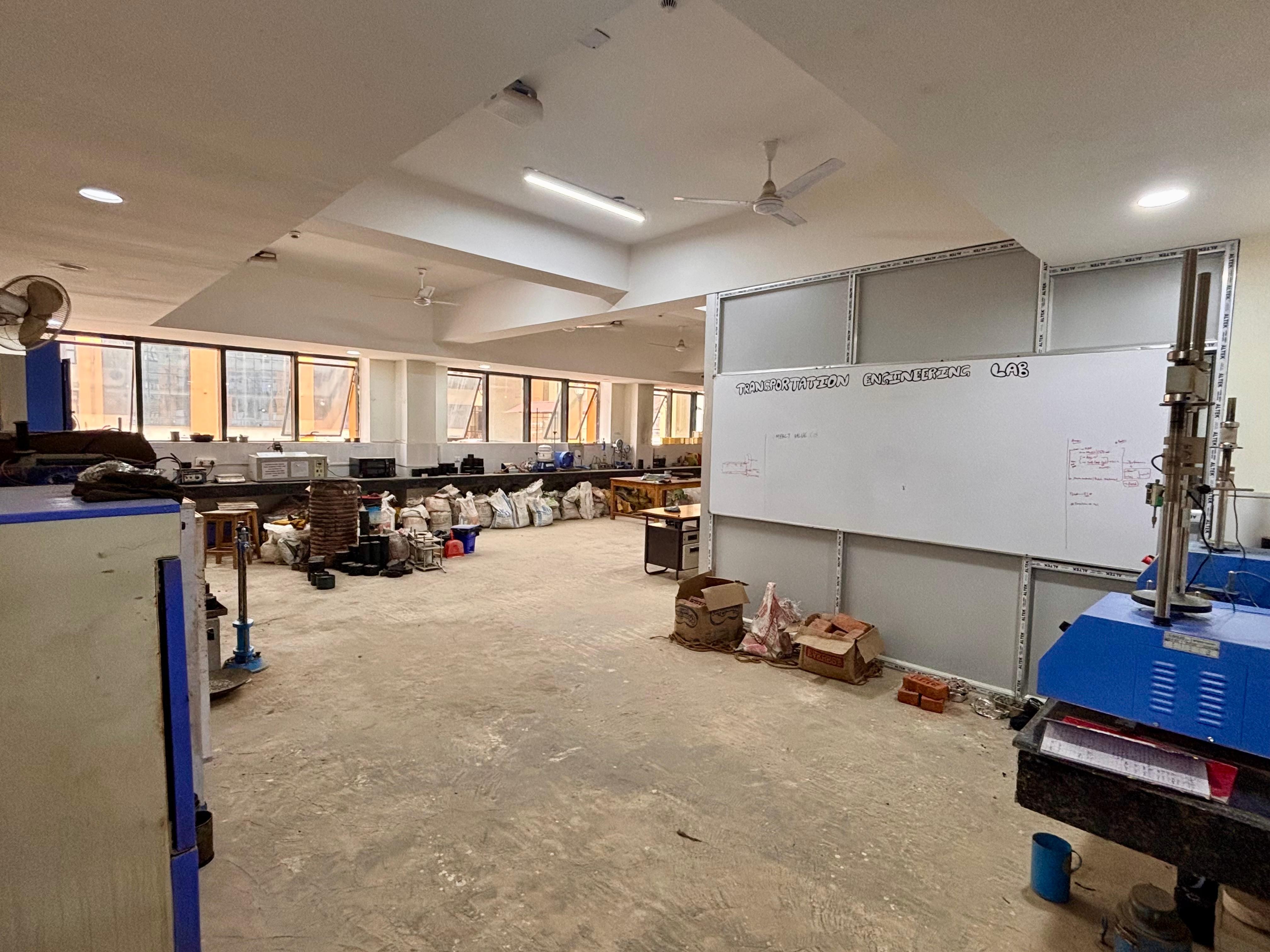
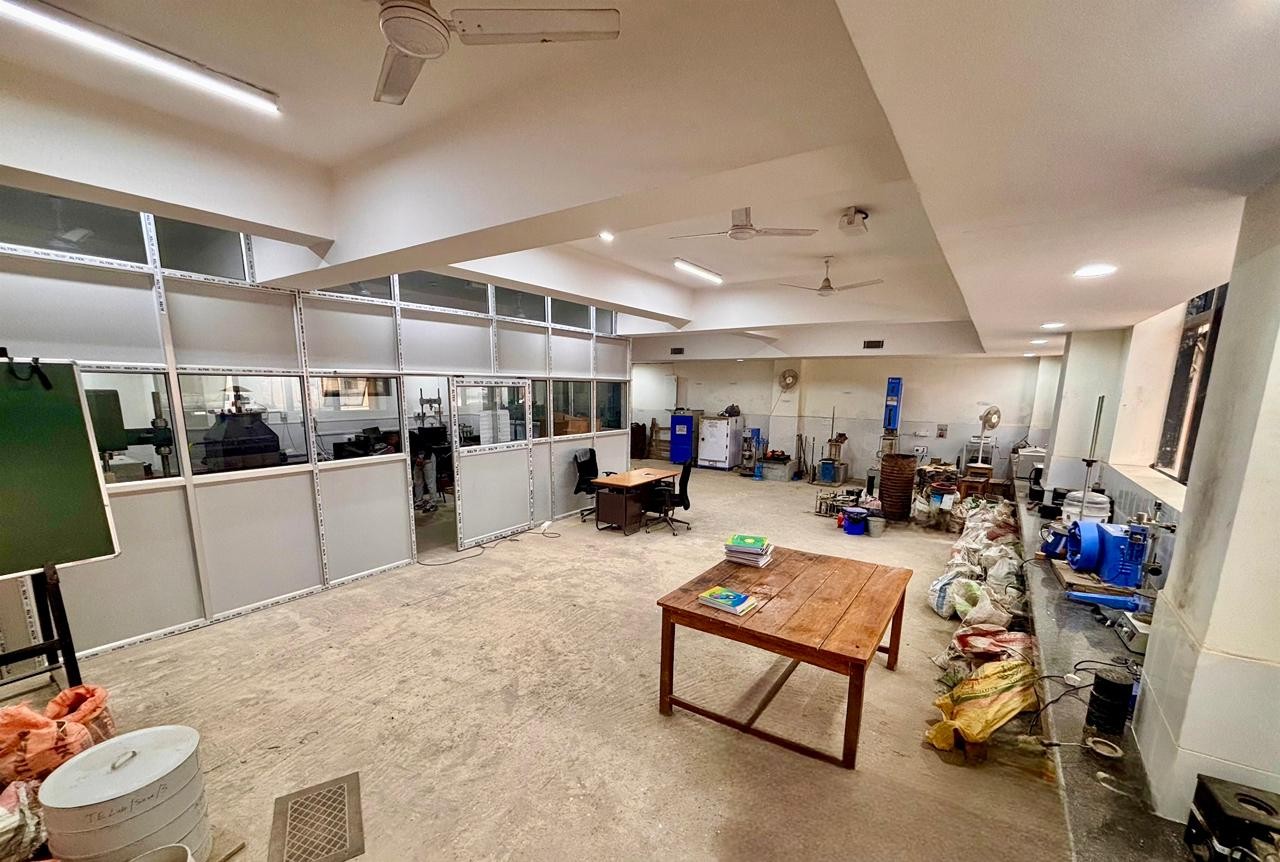
Transportation Engineering Laboratory The Transportation Engineering Laboratory is established to provide practical knowledge and hands-on training in the testing and evaluation of highway construction materials and pavement systems. The laboratory enables students to conduct experiments on aggregates, bitumen, and asphalt mixes in accordance with relevant IS and IRC standards. It supports learning in areas such as traffic engineering, pavement design, and material characterization, thereby bridging the gap between theoretical concepts and field applications. The laboratory also facilitates research and consultancy activities related to transportation infrastructure development.
|
|
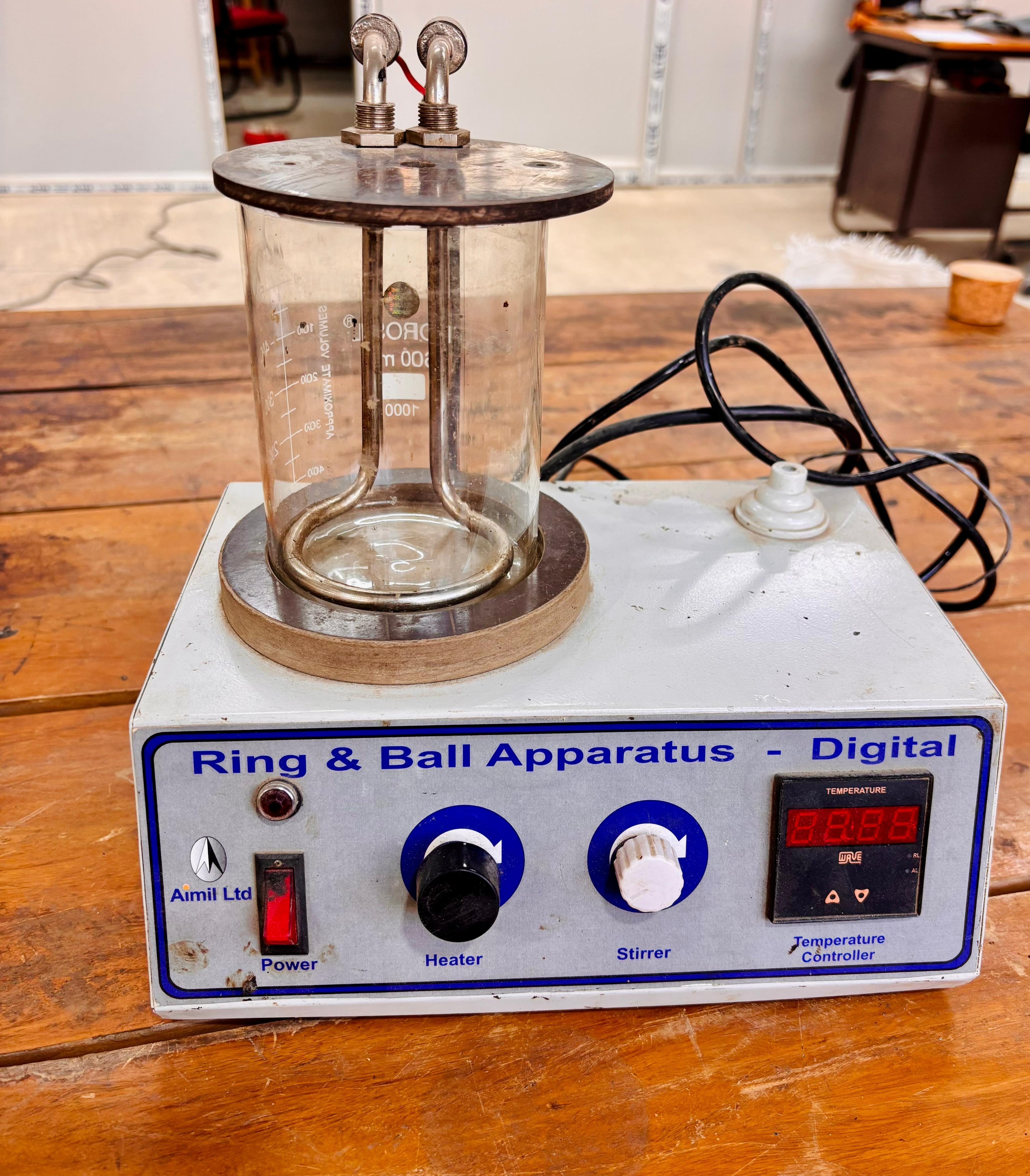 |
The Ring and Ball Apparatus for Bitumen is a laboratory instrument used to determine the softening point of bituminous materials. The test indicates the temperature at which bitumen attains a particular degree of softness under specified conditions. This value helps assess the suitability of bitumen for different climatic conditions and pavement applications, ensuring proper performance and durability of road construction materials |
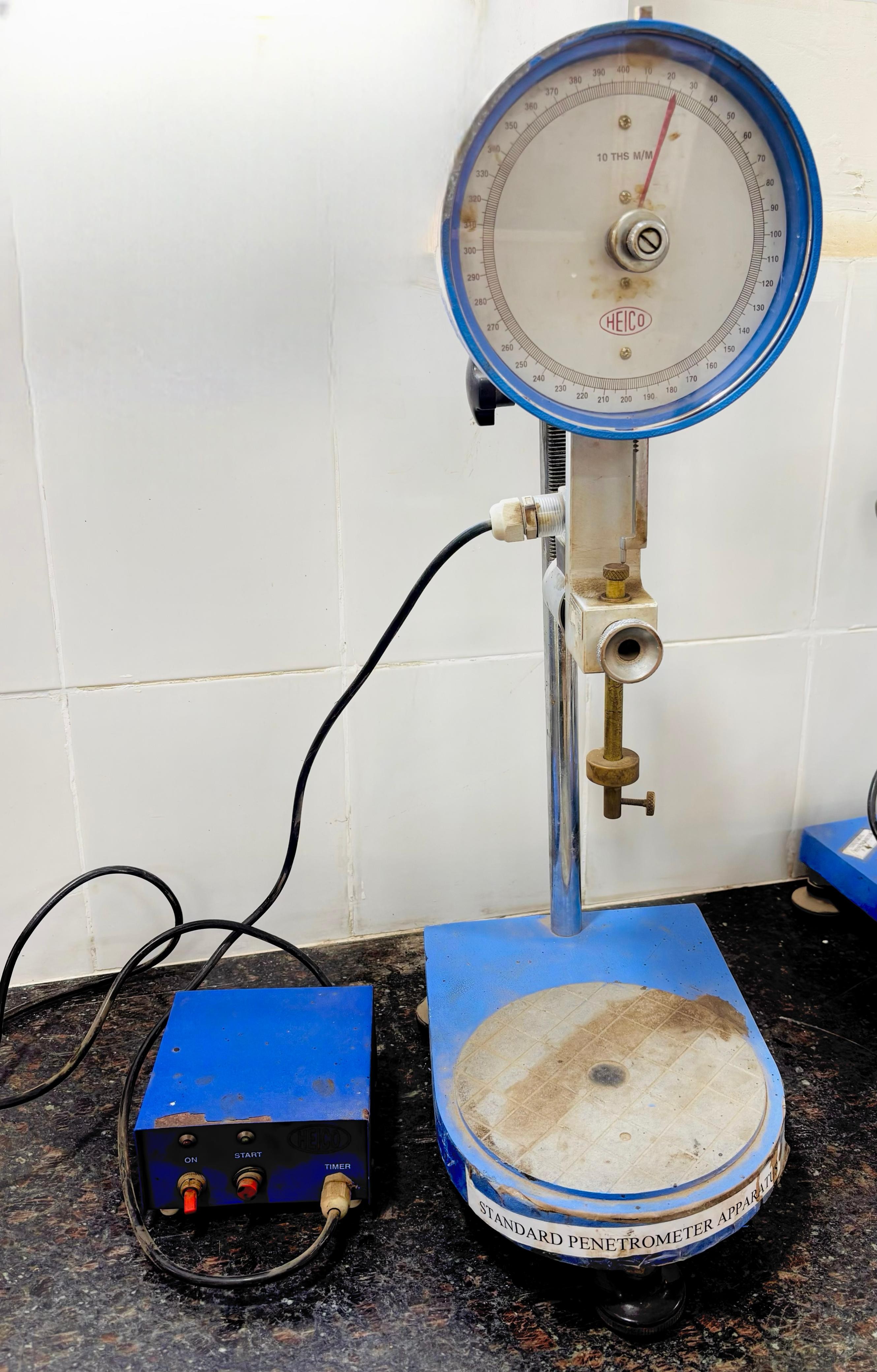 |
The Penetration Apparatus for Bitumen is a laboratory instrument used to determine the hardness or consistency of bituminous materials. The test measures the depth (in tenths of a millimeter) to which a standard needle penetrates the bitumen sample under specified load, time, and temperature conditions. The penetration value helps classify the grade of bitumen and assess its suitability for various climatic and pavement requirements |
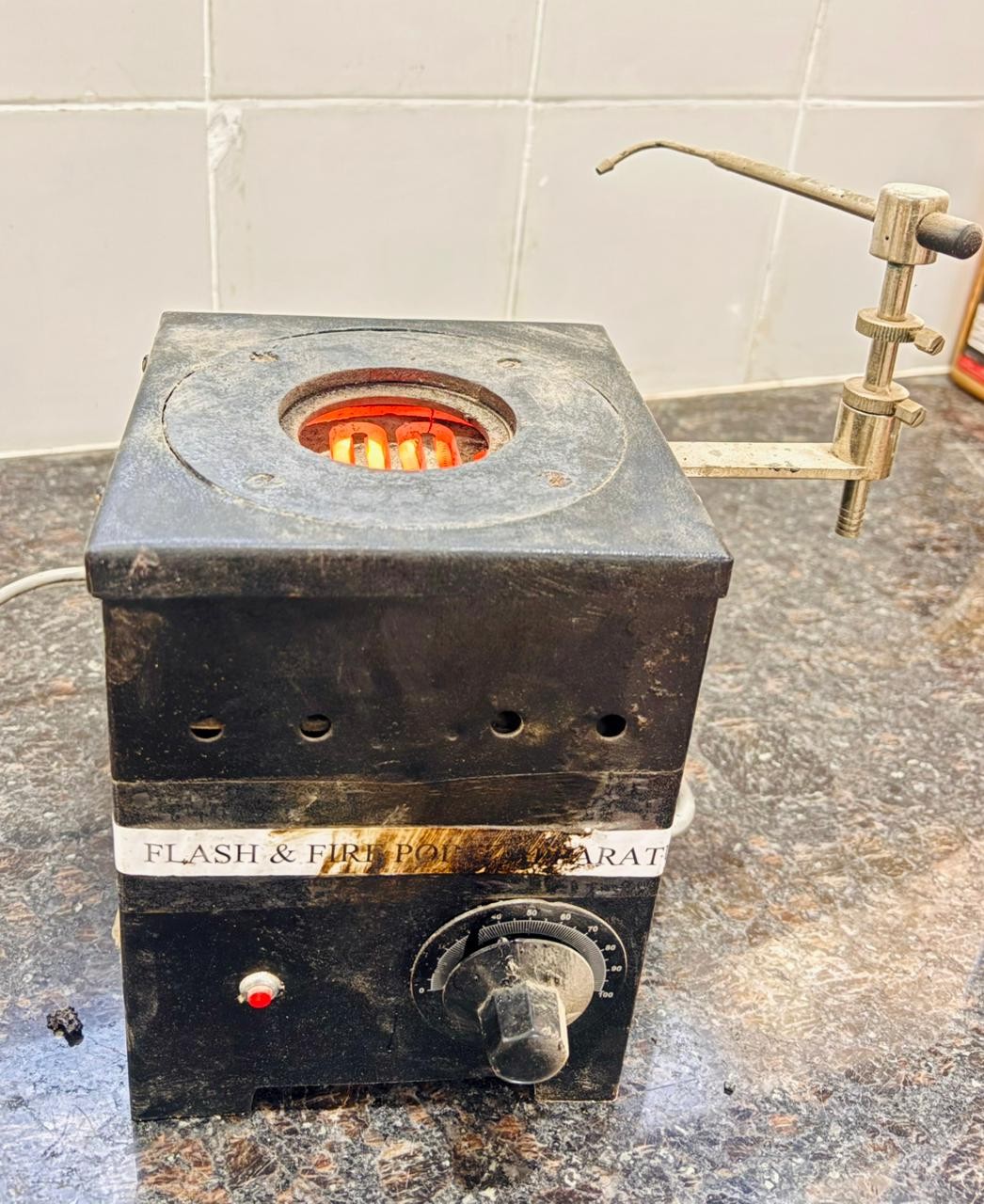 |
The Flash and Fire Point Apparatus for Bitumen is a laboratory instrument used to determine the temperatures at which bitumen emits vapors that ignite momentarily (flash point) and continue to burn (fire point) under specified conditions. This test is essential for assessing the safety of bituminous materials during heating, handling, and storage. It helps ensure safe working practices and compliance with standard specifications. |
|
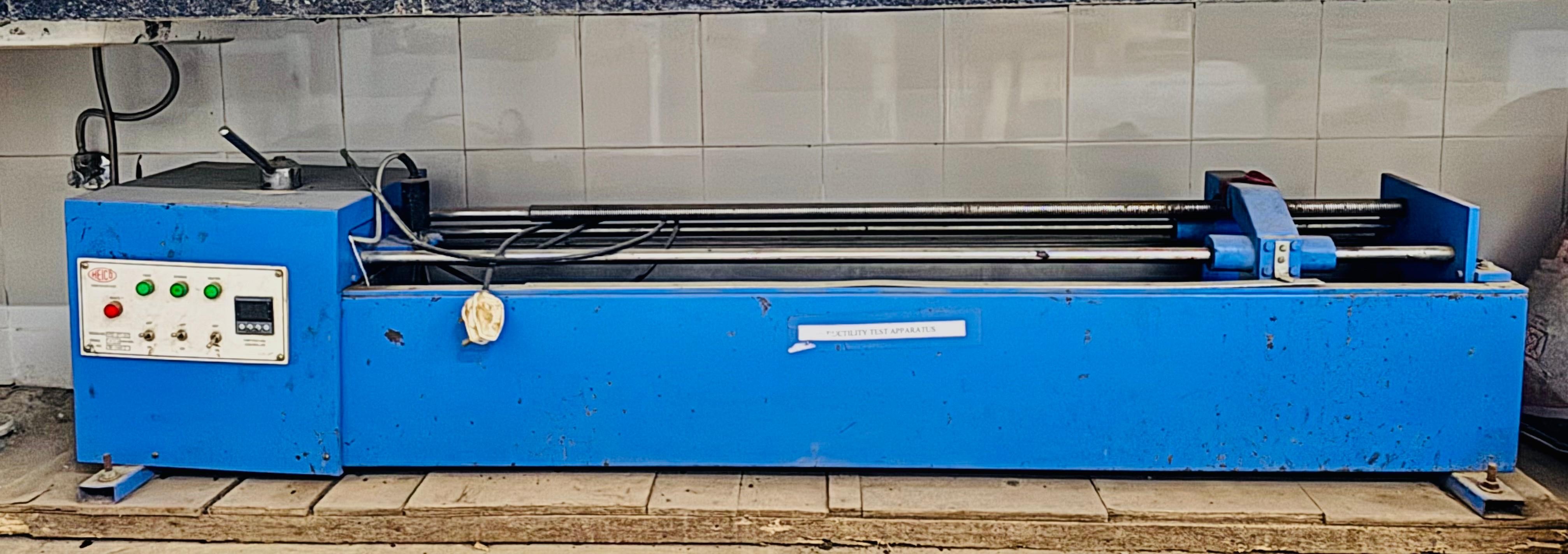
The Ductility Testing Apparatus for Bitumen is a laboratory instrument used to determine the ductility of bituminous materials, which indicates their ability to undergo deformation without breaking. In this test, a standard briquette specimen of bitumen is stretched at a specified temperature and speed until it breaks, and the distance elongated is measured in centimeters. The ductility value reflects the adhesive and elastic properties of bitumen, which are important for pavement performance and resistance to cracking. |
|
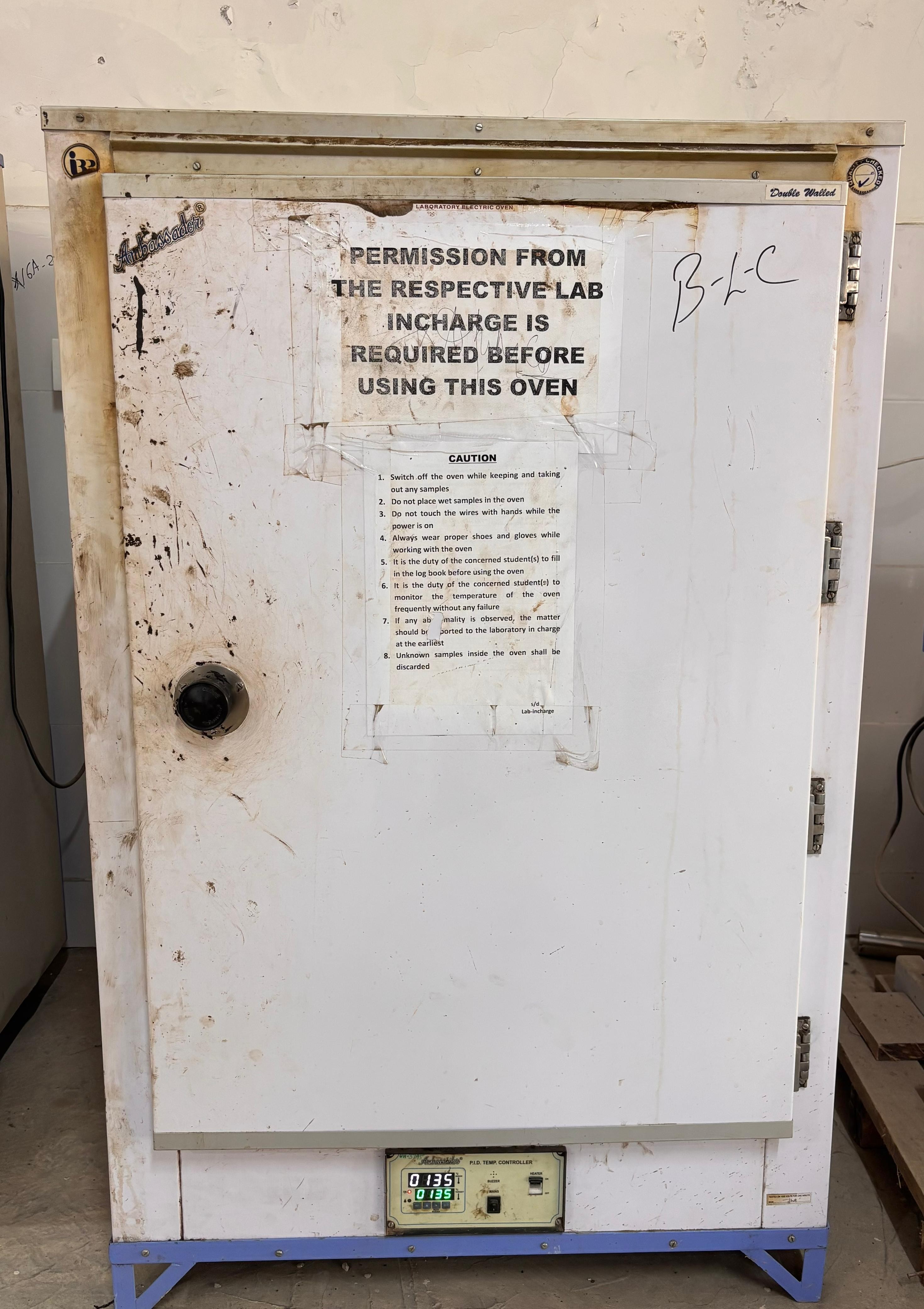 |
The Hot Air Oven in the Transportation Engineering Laboratory is used for drying aggregates, bitumen samples, and asphalt mix materials at controlled temperatures. It ensures the removal of moisture before conducting tests such as aggregate grading, specific gravity, and bituminous mix preparation. The equipment provides uniform heating, thereby ensuring accurate test results and proper sample conditioning in accordance with relevant standards. |
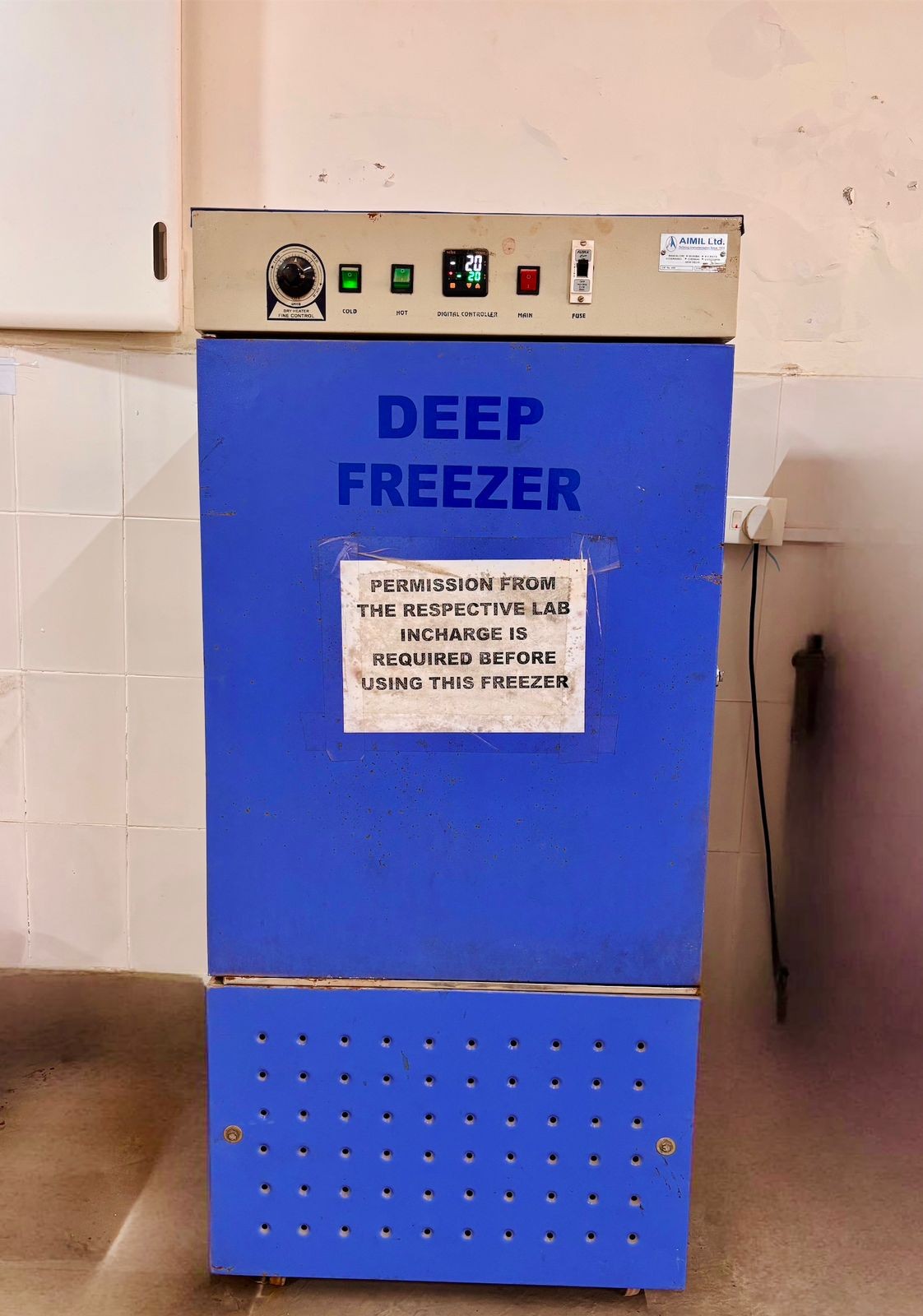 |
The Deep Freezer in the Transportation Engineering Laboratory is used to condition bituminous and asphalt specimens at low temperatures for performance testing. It helps simulate cold climatic conditions to evaluate properties such as cracking resistance, durability, and temperature susceptibility of pavement materials. The equipment ensures controlled and uniform cooling of samples, thereby improving the accuracy and reliability of low-temperature test results. |
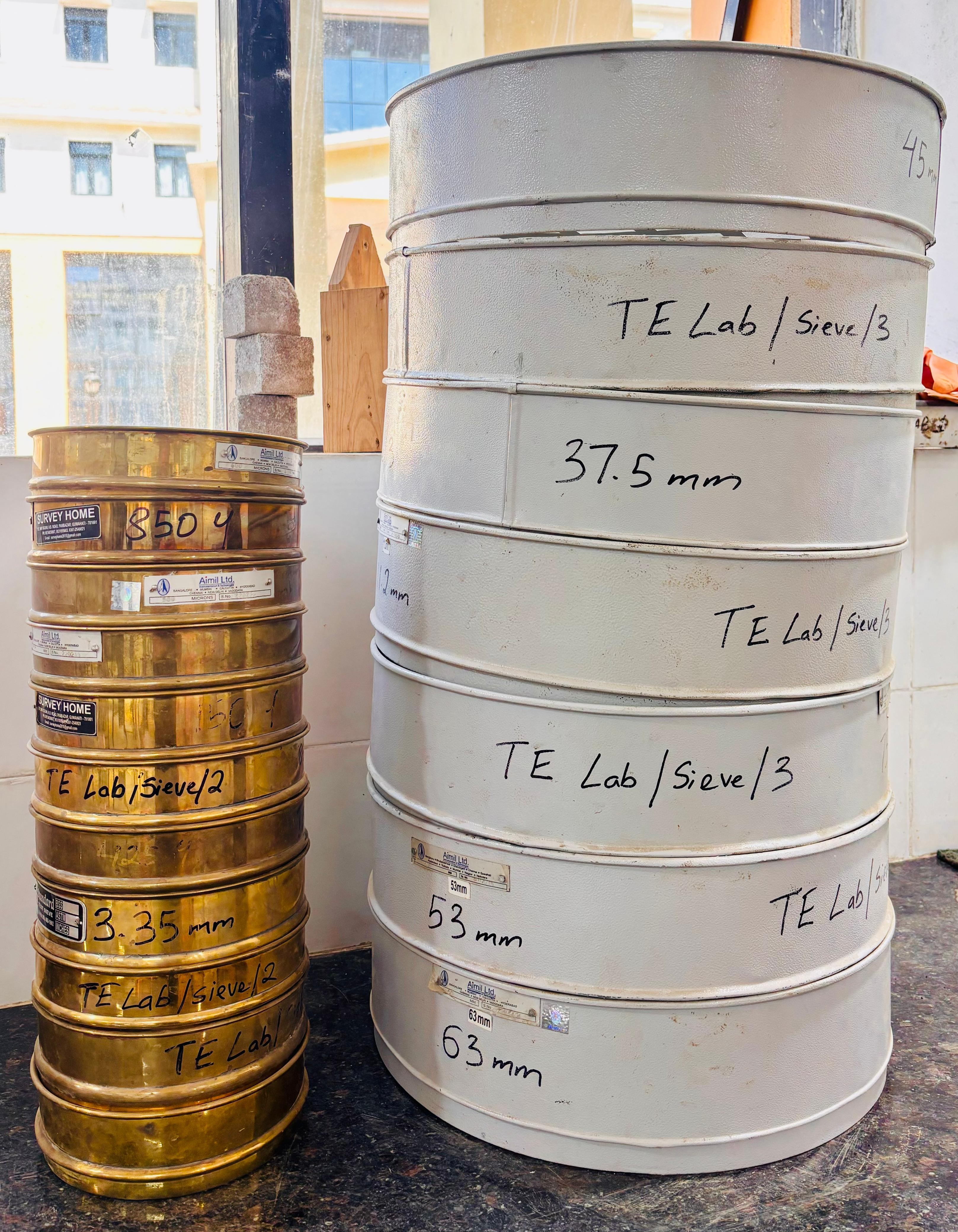 |
Sieves are used for conducting sieve analysis of aggregates to determine their particle size distribution. The sieves, arranged in decreasing mesh sizes, help classify aggregates as per standard grading requirements. This test is essential for assessing the suitability of aggregates in pavement construction and ensuring proper strength, stability, and durability of bituminous and granular layers. |
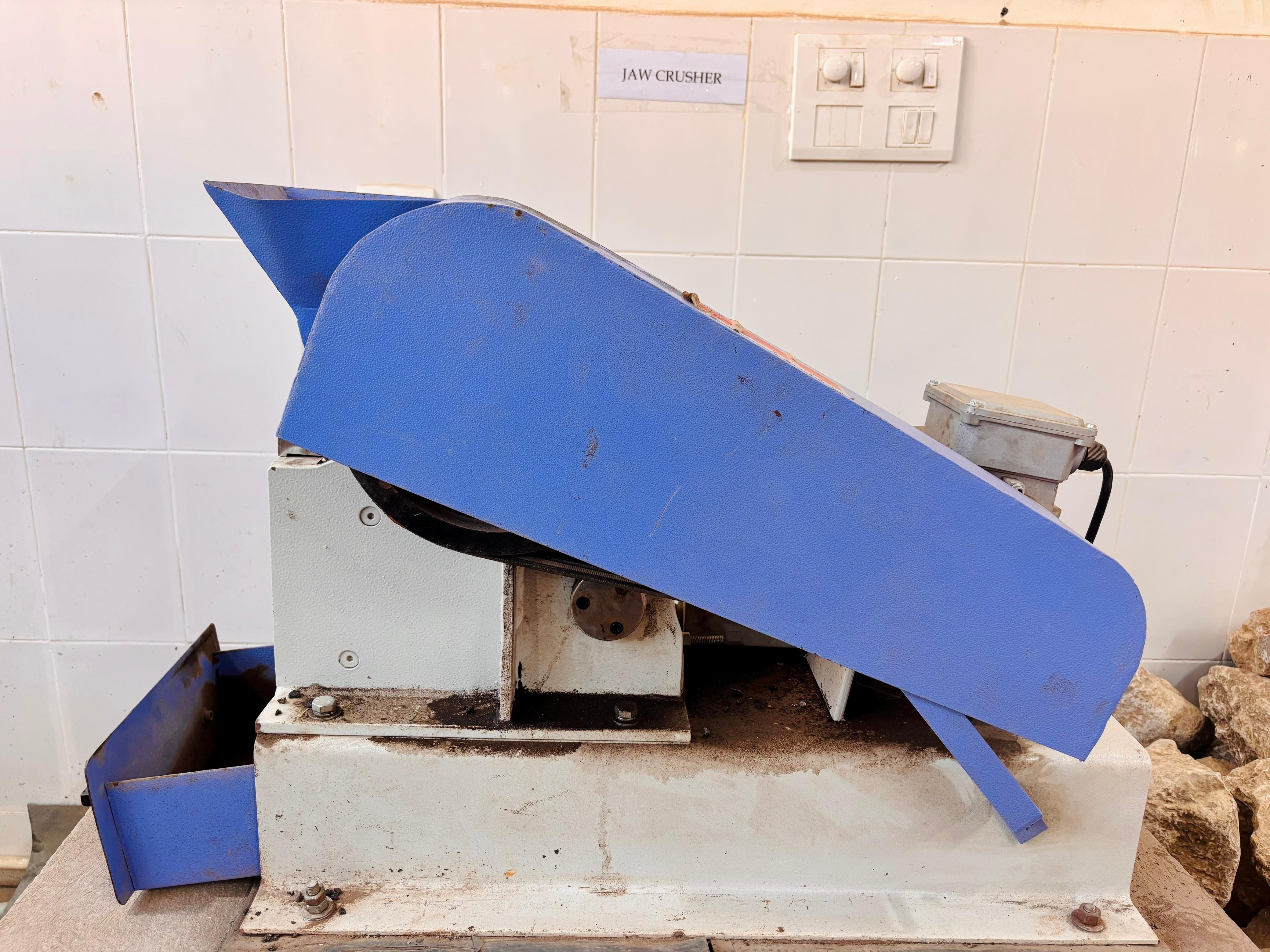 |
The Jaw Crusher is used to crush large aggregate or rock samples into smaller, manageable sizes for testing purposes. It operates by applying compressive force through a fixed and a movable jaw plate. The equipment is essential for preparing aggregate samples for tests such as sieve analysis, impact value, and crushing strength, ensuring proper grading and quality control in pavement construction materials. |
 |
The Impact Testing Apparatus is used to determine the aggregate impact value, which indicates the toughness and resistance of aggregates to sudden shock or impact. In this test, a standard hammer is allowed to fall on a sample of aggregates, and the resulting fines are measured. The test helps assess the suitability of aggregates for use in pavement layers subjected to dynamic traffic loads. |
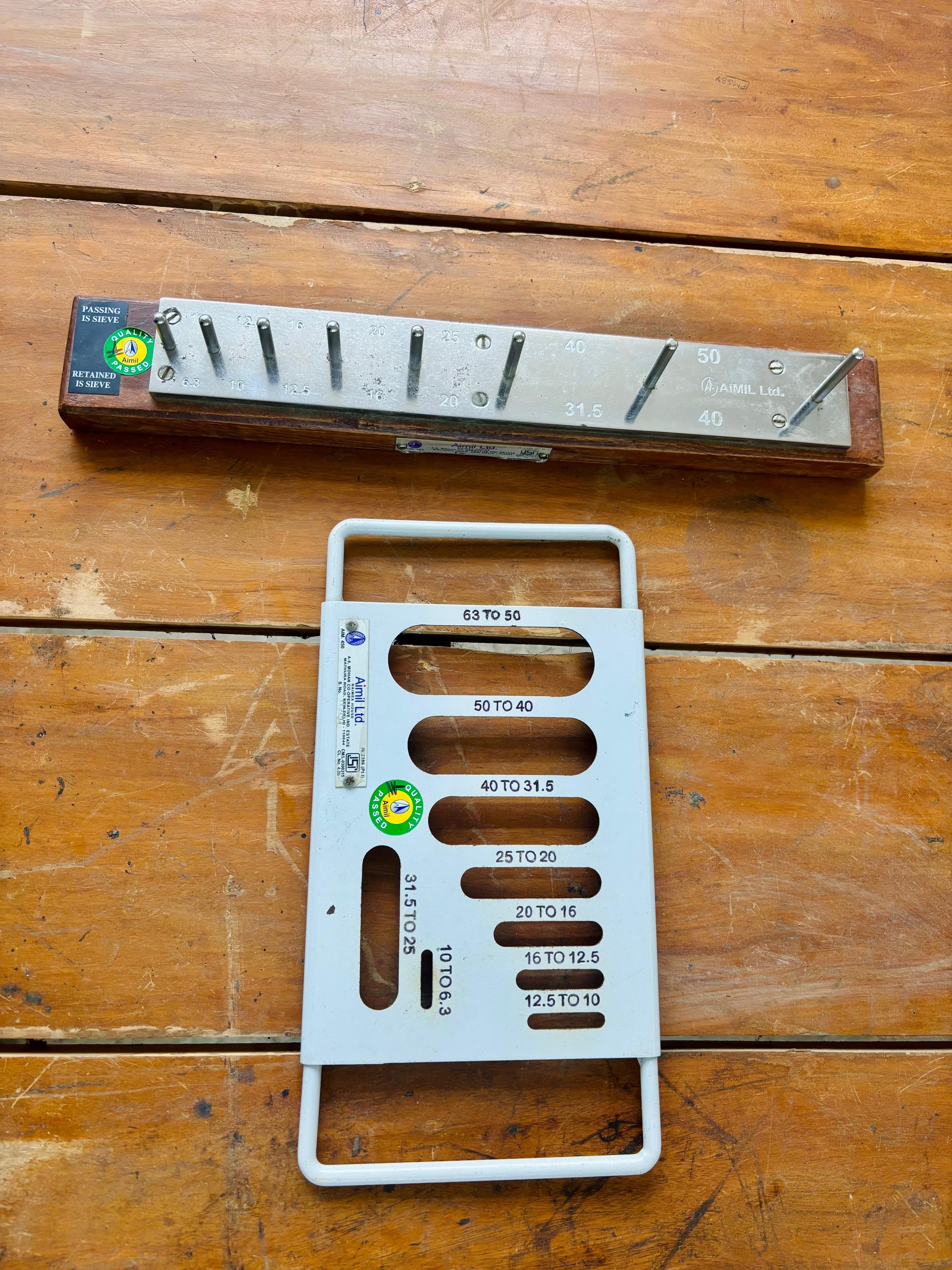 |
The Length Gauge and Thickness Gauge are used to determine the shape characteristics of aggregates, specifically the flakiness index and elongation index. The Thickness Gauge measures flaky particles (those having small thickness compared to their size), while the Length Gauge identifies elongated particles (those having excessive length). These tests help assess the suitability of aggregates for pavement construction, as excessive flaky and elongated particles can reduce strength and durability of road layers. |
 |
The Buoyancy Balance is used to determine the specific gravity and water absorption of aggregates. It works on the principle of buoyancy by measuring the weight of the aggregate sample in air and while submerged in water. The test is essential for evaluating the quality and durability of aggregates used in pavement construction and bituminous mix design. |
 |
The Skid Resistance Tester Machine is a laboratory and field testing equipment used to measure the skid resistance or frictional properties of pavement surfaces. It evaluates the ability of a road surface to provide adequate grip to vehicle tyres, particularly under wet conditions. The test helps assess surface texture and safety performance of pavements, ensuring reduced risk of skidding and improved road safety. |
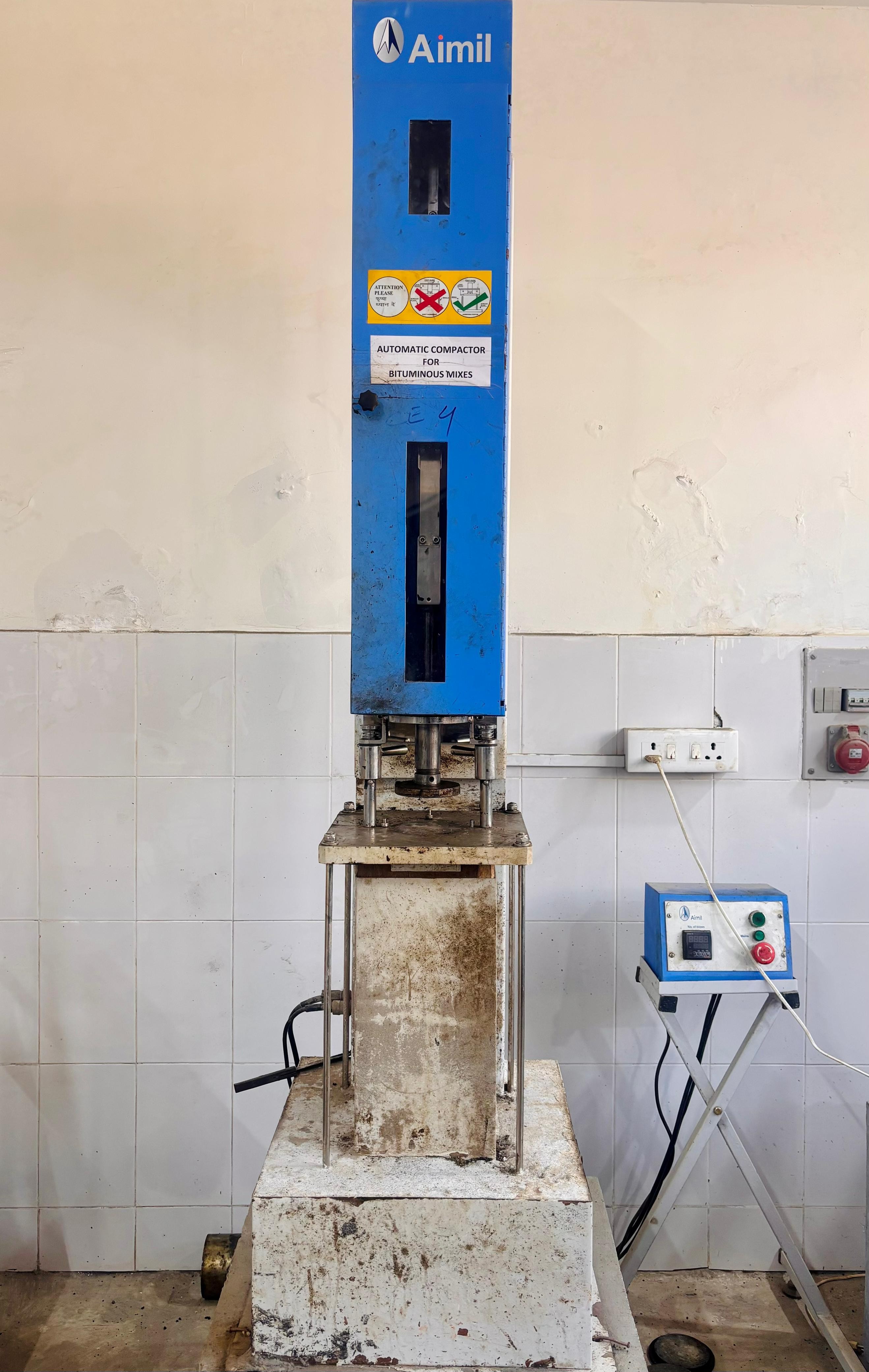 |
An Automatic Compactor for Bituminous Mixes is a laboratory equipment used to prepare cylindrical asphalt specimens by applying controlled and uniform compaction. It ensures consistent compactive effort in accordance with standard testing procedures such as Marshall mix design. The machine improves accuracy, repeatability, and efficiency in the preparation of bituminous specimens for determining stability, flow value, density, and other pavement performance characteristics. |
 |
The Film Stripping Device is a laboratory apparatus used to assess the stripping characteristics of bitumen from the surface of aggregates in the presence of water. The test evaluates the adhesion between bitumen and aggregate by observing the extent of bitumen film separation after immersion under specified conditions. It helps determine the suitability of aggregates for bituminous mix design and ensures durability and resistance to moisture damage in pavement construction. |
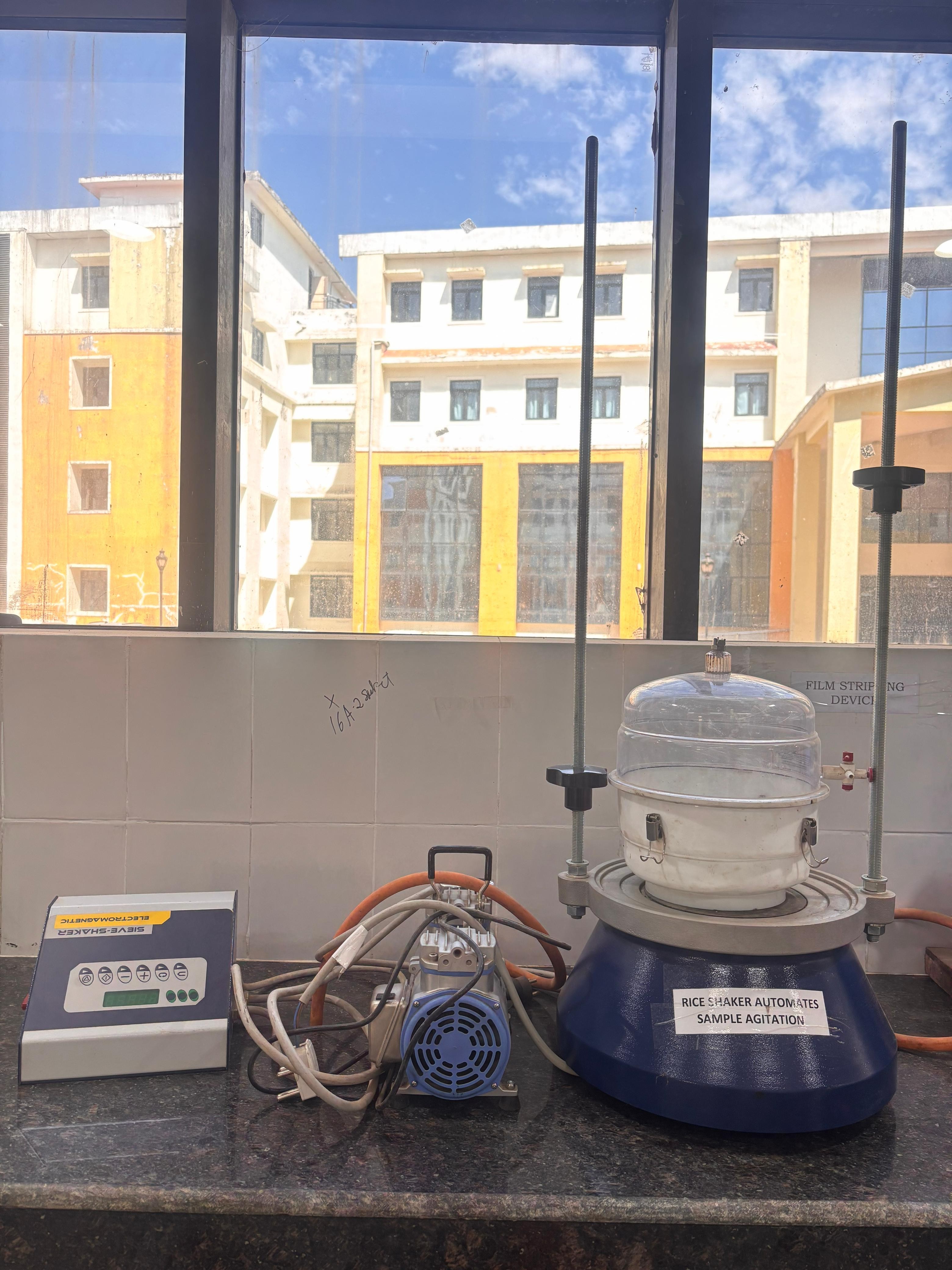 |
The Rice Shaker is a laboratory device used to automate the agitation of samples during testing procedures. It provides uniform and controlled shaking action, ensuring proper mixing, separation, or extraction of materials as required. In transportation and bituminous laboratories, it is commonly used in procedures such as binder extraction tests, improving consistency, accuracy, and efficiency of the testing process. |
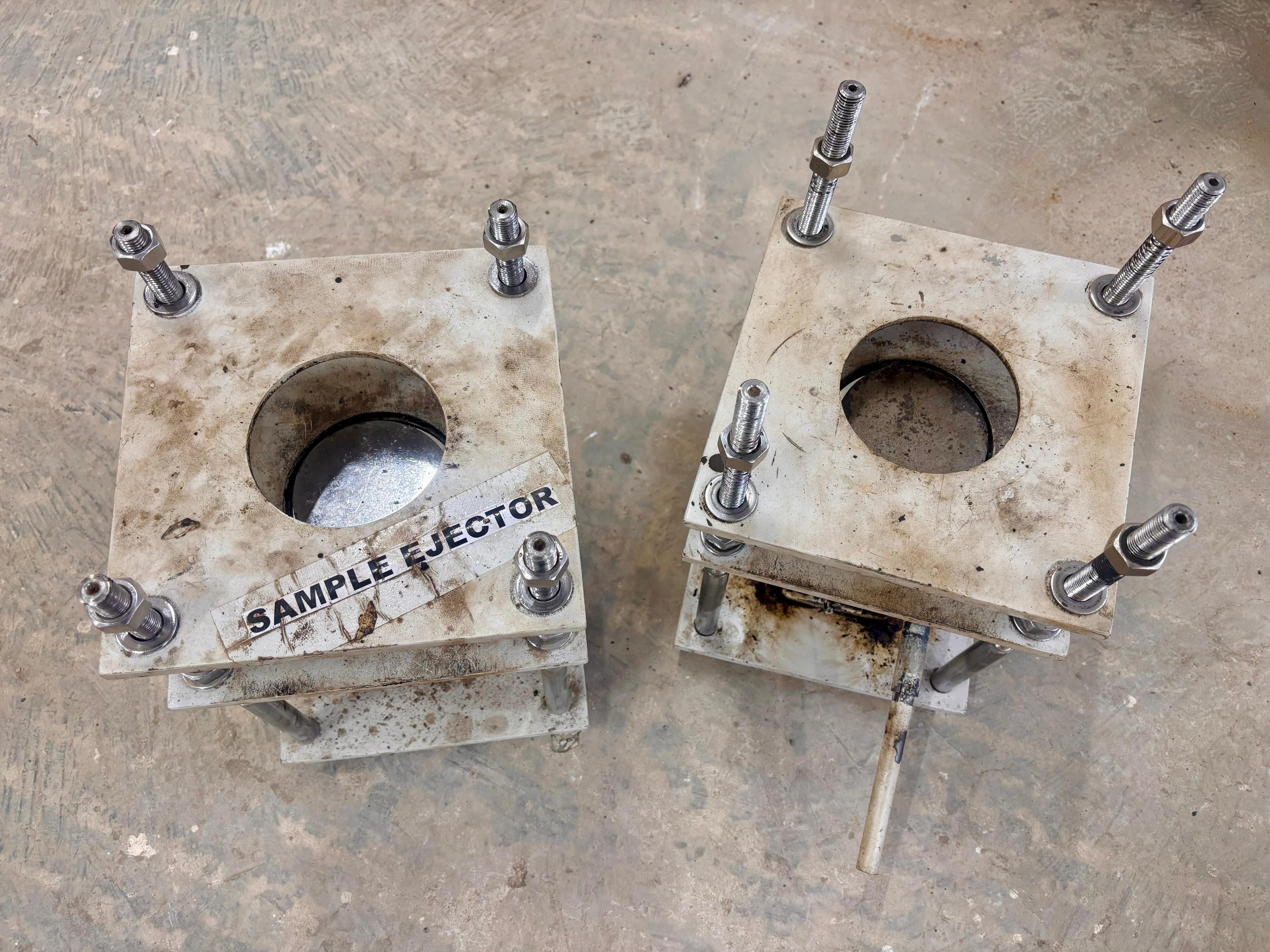 |
The Sample Ejector is a laboratory accessory used to safely and easily remove compacted specimens from moulds without damaging the sample. It is commonly used in bituminous and soil testing, such as Marshall Specimens or Proctor mould samples. The device applies controlled pressure to eject the specimen uniformly, ensuring the integrity of the sample for further testing and evaluation. |
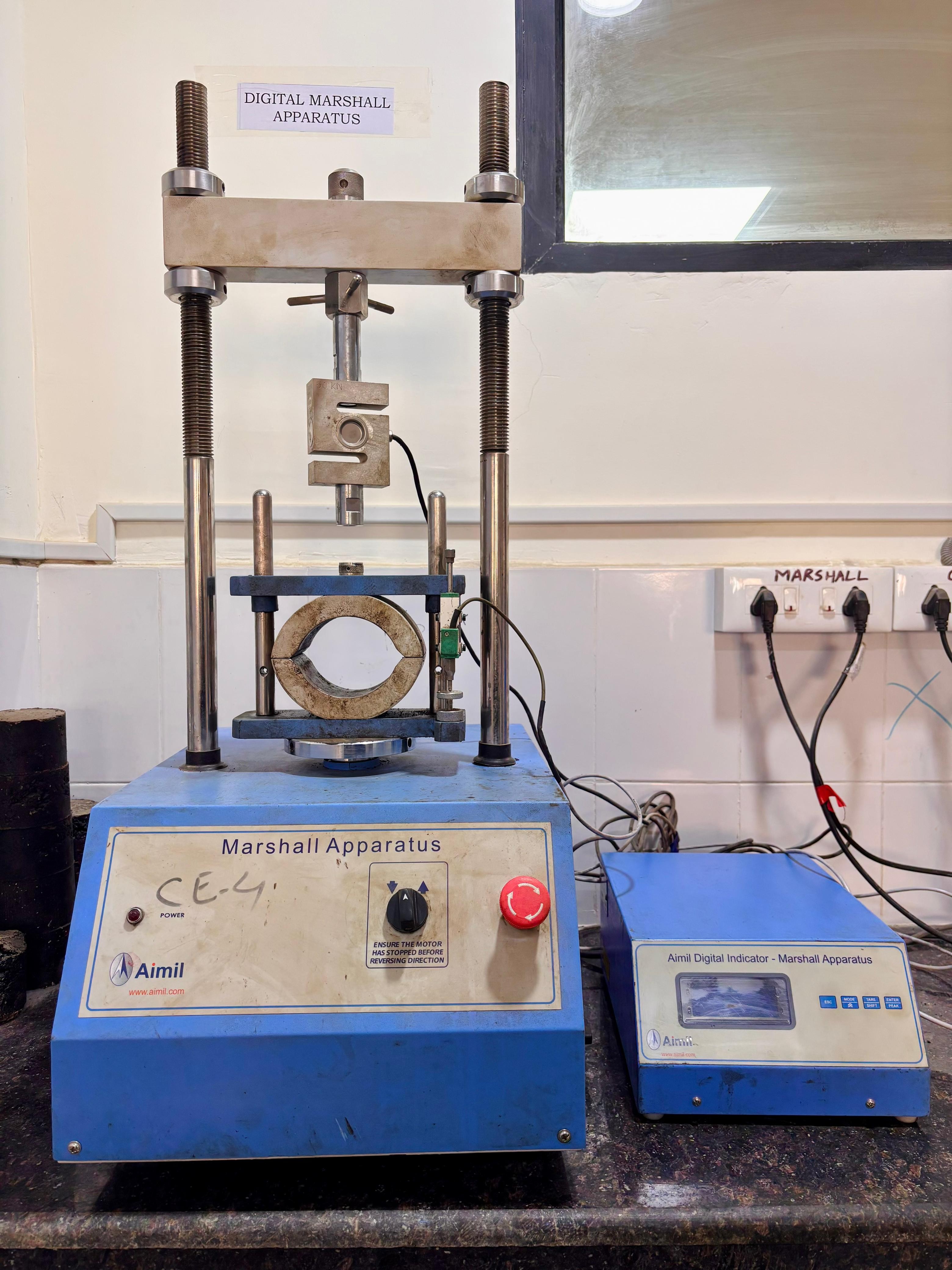 |
The Marshall Apparatus is an equipment used to determine the stability and flow values of bituminous mixes in accordance with the Marshall Mix Design method. It measures the maximum load carried by a compacted asphalt specimen at a standard temperature and the corresponding deformation. The test helps evaluate the strength, durability, and performance characteristics of bituminous pavements, ensuring suitability for road construction. |
 |
The CBR Apparatus (California Bearing Ratio Apparatus) is a laboratory equipment used to determine the bearing capacity of subgrade soil and base course materials. The test measures the resistance of a soil sample to penetration under controlled conditions and compares it to a standard load. The CBR value obtained is used in the design of flexible pavements to assess the strength and load-bearing capacity of pavement layers. |
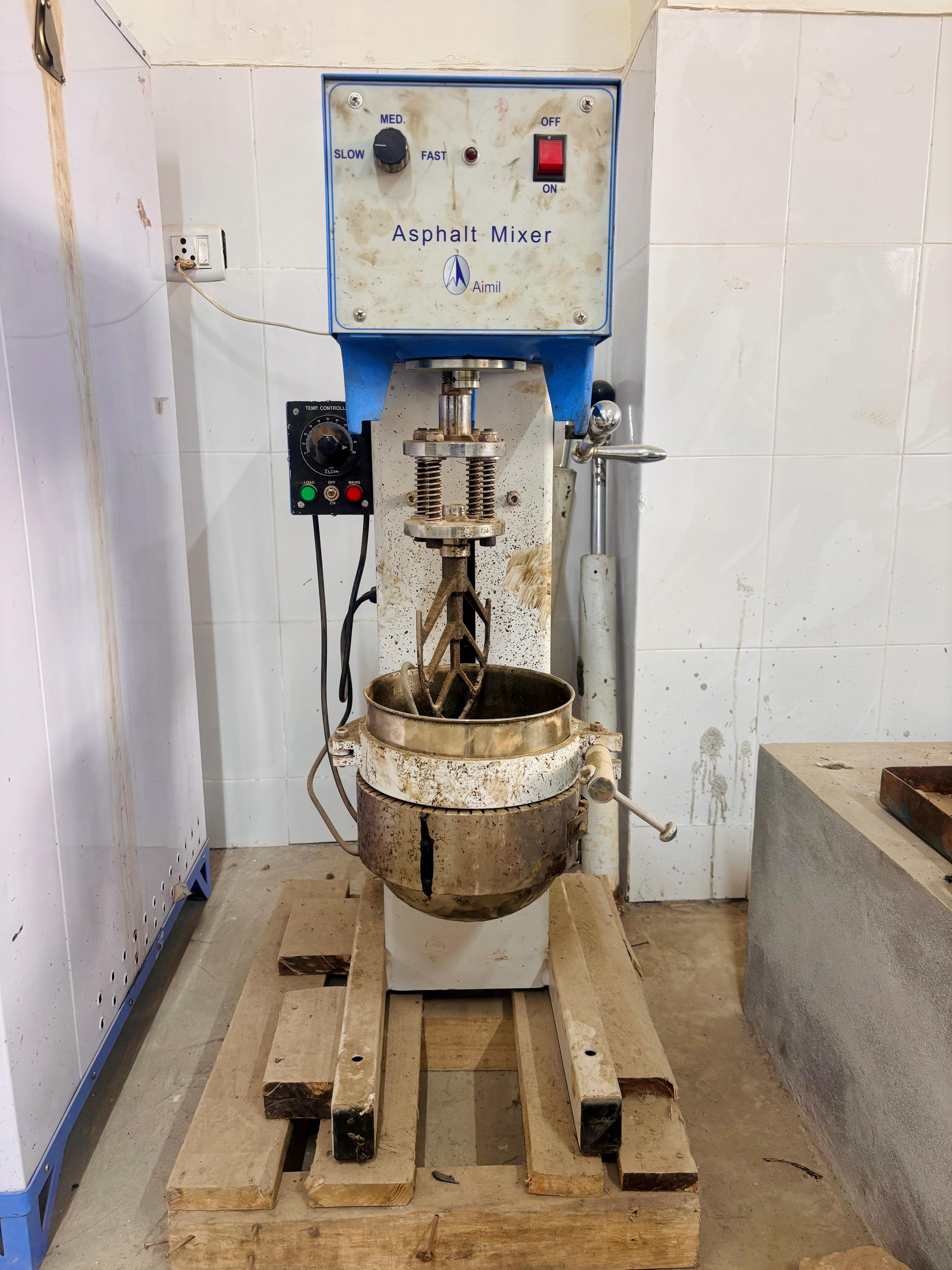 |
The Asphalt Mixer is a laboratory equipment used to prepare uniform bituminous mixes by thoroughly blending heated aggregates and bitumen at controlled temperatures. It ensures proper coating of aggregates and homogeneous mixing, which is essential for accurate mix design and performance evaluation. The equipment is commonly used in Marshall mix design and other asphalt testing procedures. |
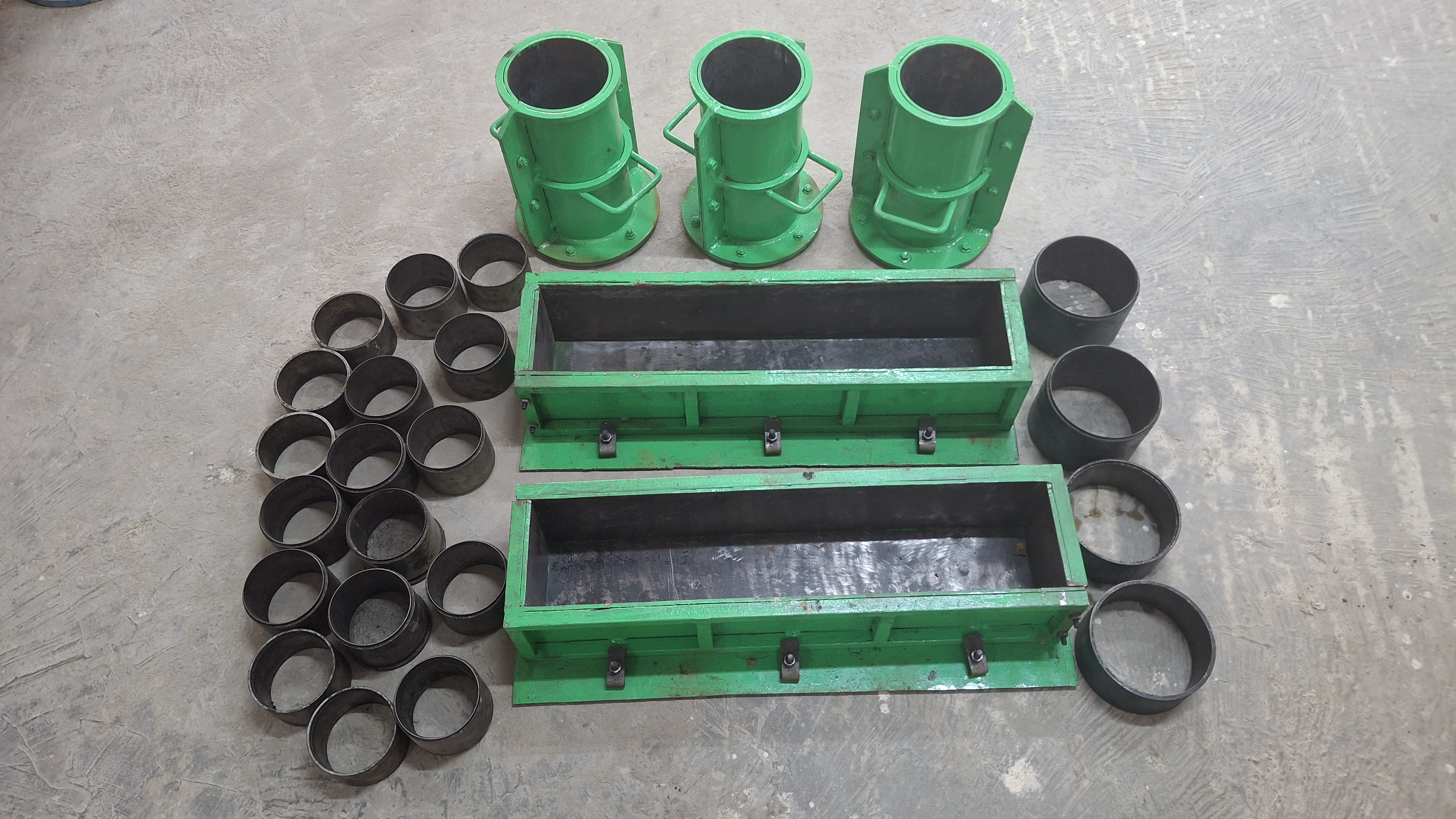 |
Moulds are laboratory accessories used to prepare and shape test specimens of soil, concrete, or bituminous materials into standard sizes and dimensions. They ensure uniformity and accuracy in specimen preparation for tests such as compressive strength, compaction, CBR and Marshall stability. Properly fabricated moulds help maintain consistency and reliability of laboratory test results. |
|
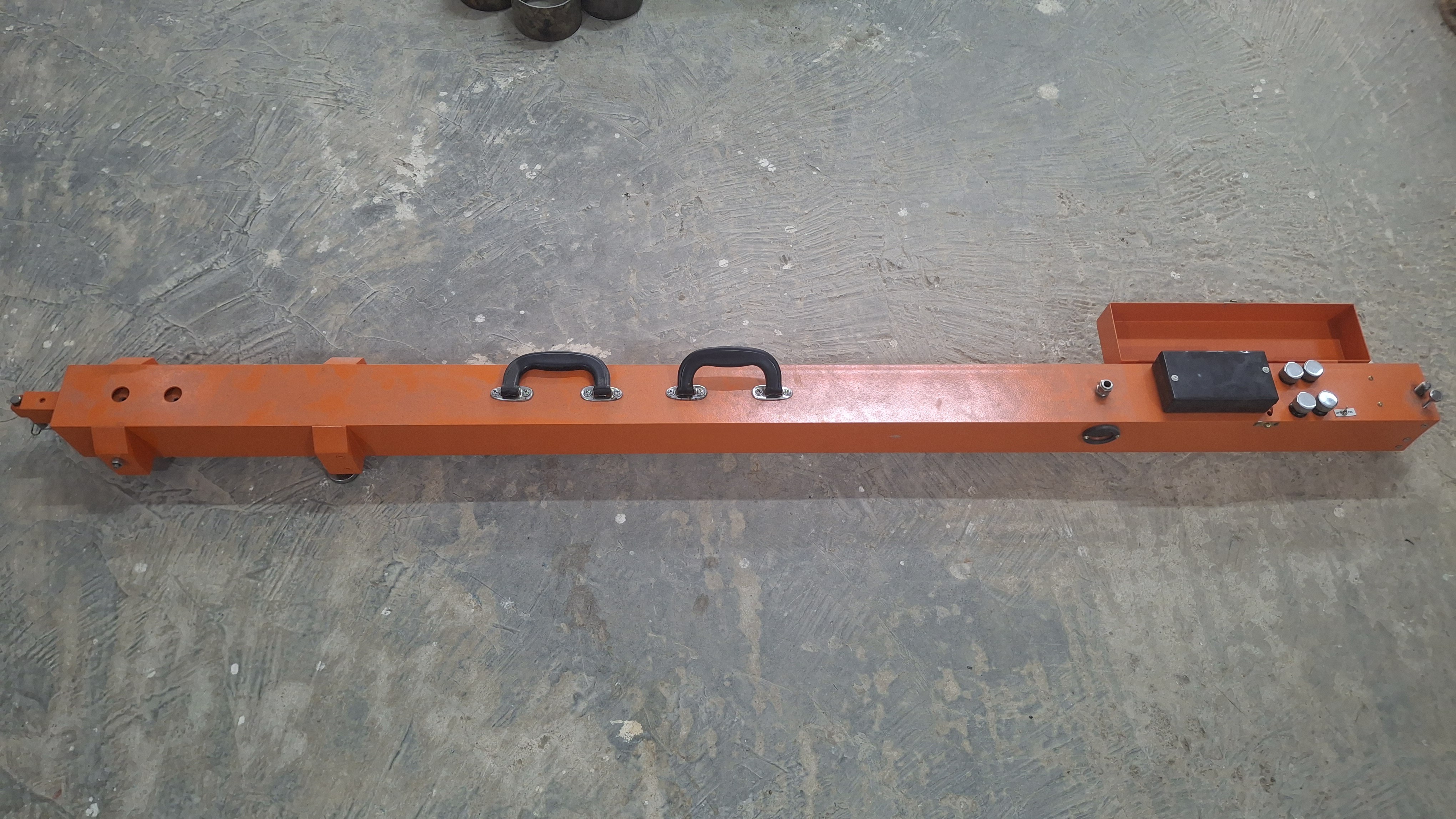
The Benkelman Beam is a field testing instrument used to measure the rebound deflection of flexible pavements under a standard wheel load. It helps evaluate the structural capacity and performance of existing road pavements. The deflection values obtained are used in the design of pavement strengthening or overlay thickness, ensuring durability and improved service life of the roadway. |
|
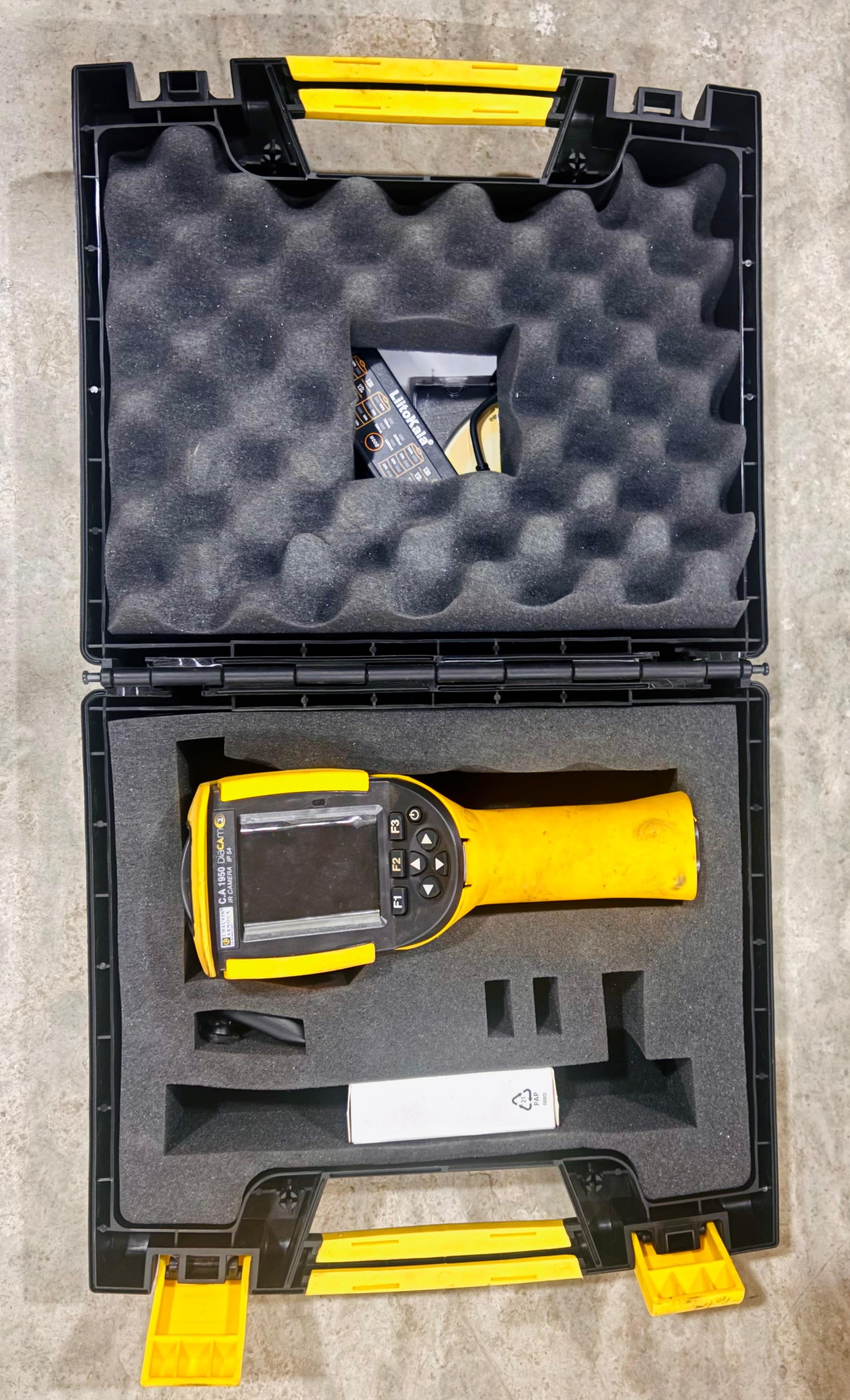 |
Thermal Camera under project title "Investigating Self-Healing Capability and performance of HMA mixes containing steel slag as aggregates" funded by ANRF, file no CRG/2022/008018-G
|
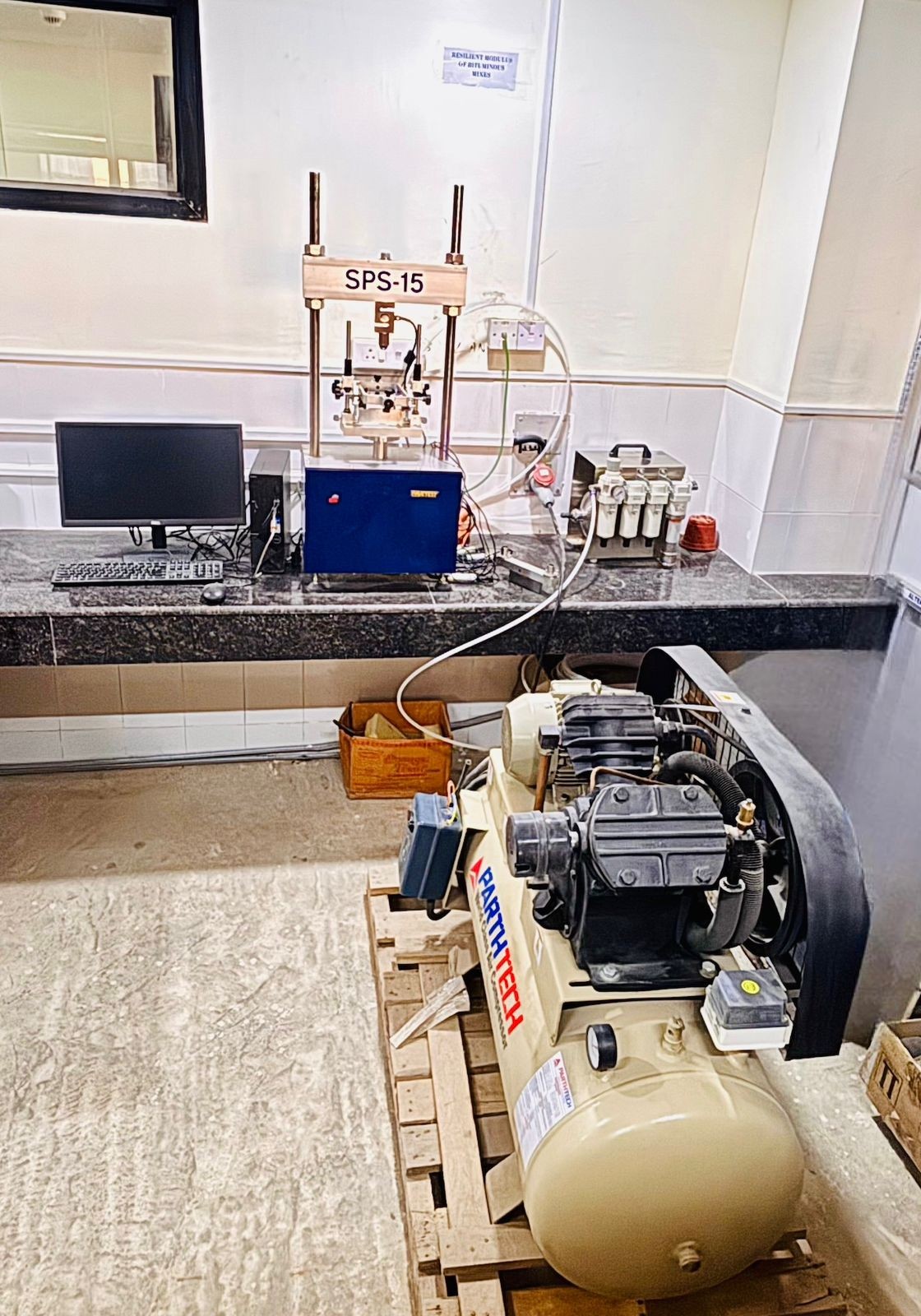 |
Resilient Modulus Apparatus under project title "Investigating Self-Healing Capability and performance of HMA mixes containing steel slag as aggregates" funded by ANRF, File no CRG/2022/008018-G
|
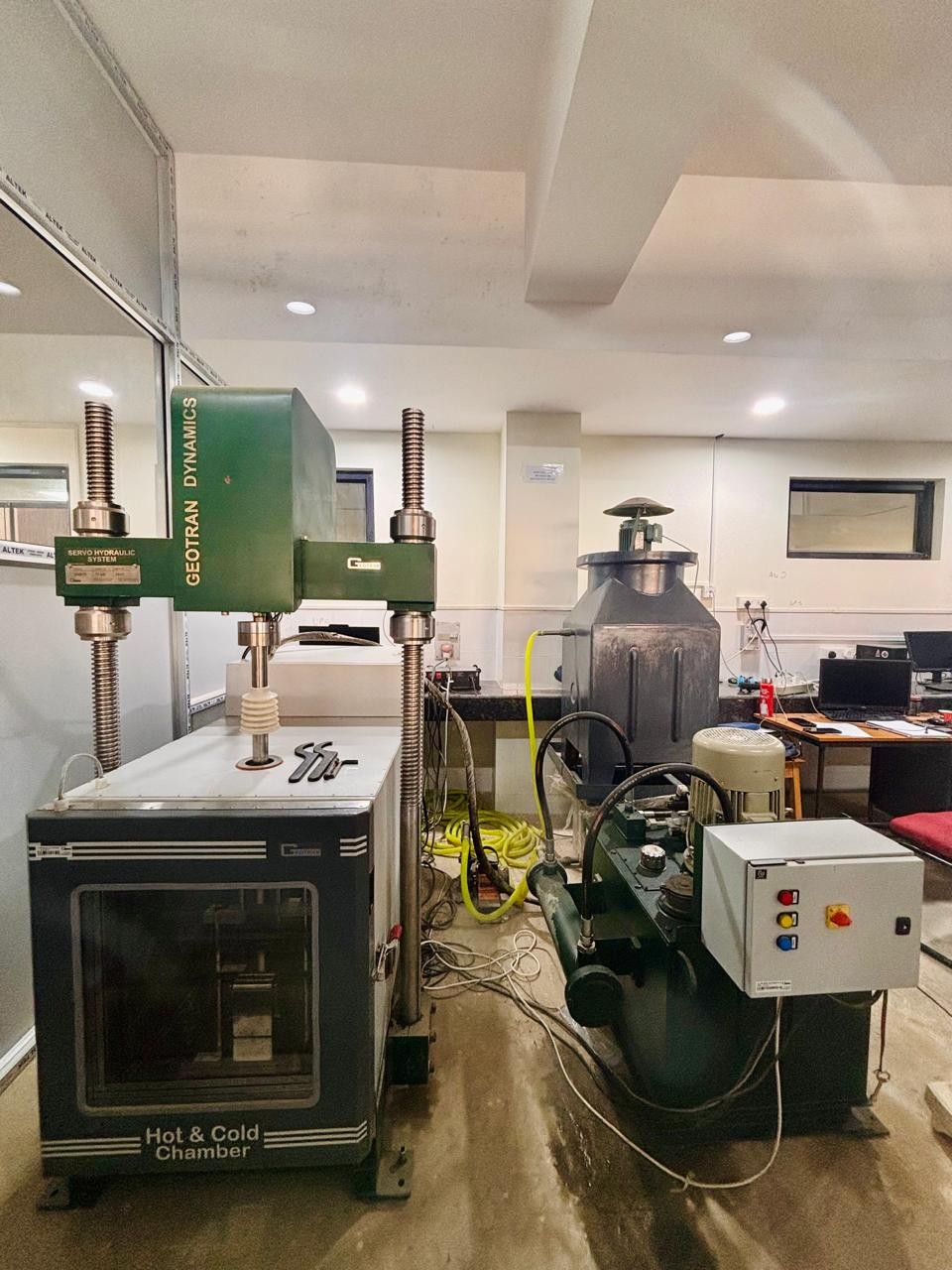 |
Semi-Circular Bending Apparatus (SCB) under Project title “Gainful Utilization of Overburden Mining Waste Generated During Limestone Mining in Meghalaya Region as Flexible Pavement Material” funded by ANRF, File no. EEQ/2022/000397
|